Three thousand people put £70 million into a Costa Rican forest. The forest existed. That was the clever part.
The trees were real.
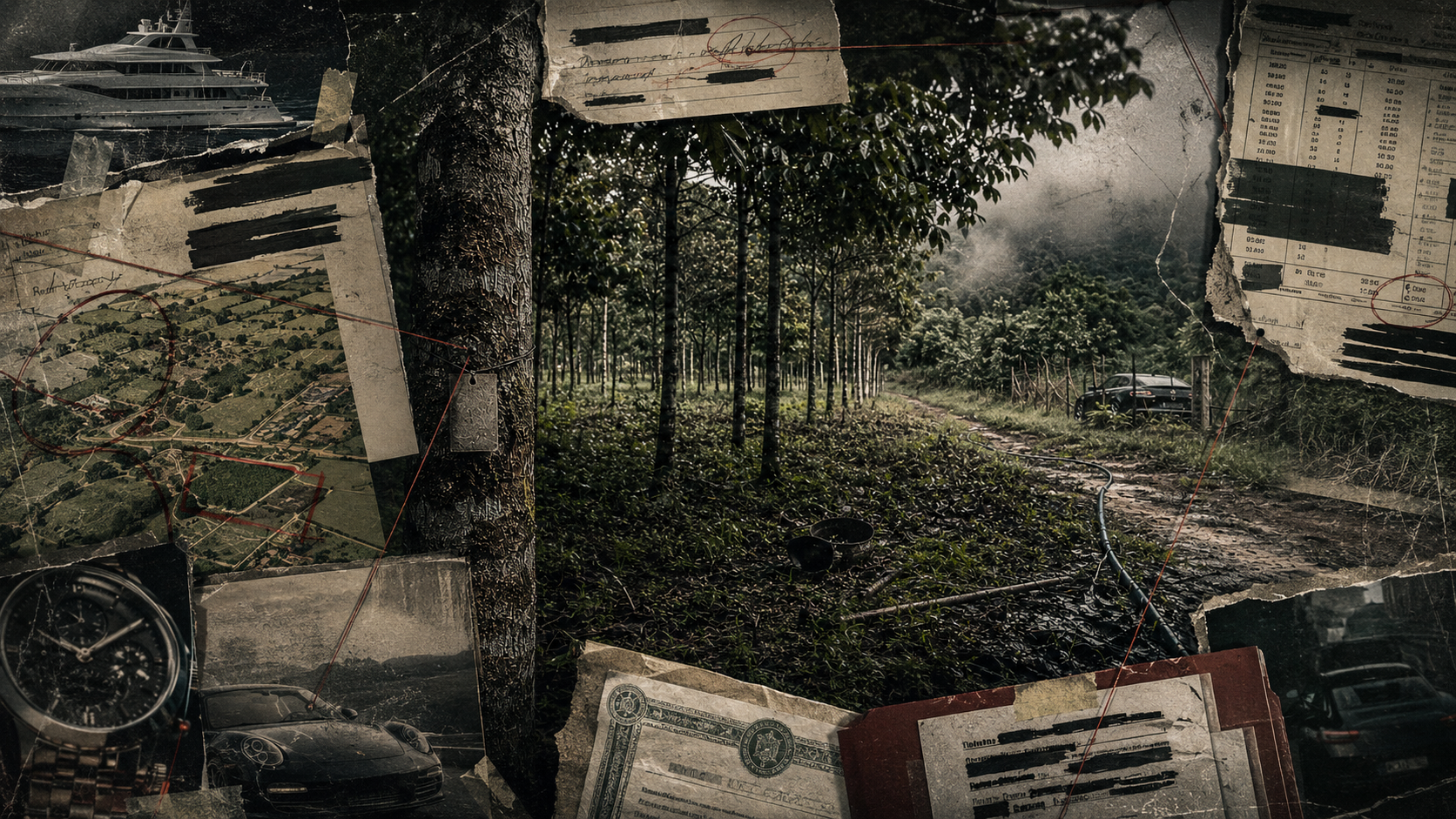
Around two million of them were planted in Costa Rica. Real saplings. Real land. Real photographs for the brochures.
You could point to them.
That mattered, because Ethical Forestry Limited was asking people to invest their retirement savings in something thousands of miles away. Something they couldn’t easily visit, inspect, value, or sell.
The trees made everything else feel real too.
The company said investors could put their money into fast-growing hardwoods. The trees would mature, be harvested, and eventually sold. Investors would receive substantial returns. Their pension would grow while their money helped build something green.
It sounded responsible.
It sounded profitable.
It even had the word ethical in the name.
What nobody told the investors was that there wasn’t enough money set aside to maintain the trees or harvest them commercially.
The forest existed.
The investment never had a serious chance.
Three men in court
On September 3, 2026, Matthew Pickard, Stephen Greenaway, and Paul Laver stood before Southwark Crown Court.
By then, Ethical Forestry had been dead for more than a decade.
The three former directors had already pleaded guilty to fraudulent trading. The company had collapsed. Thousands of investors had lost their money. The Serious Fraud Office had spent nine years investigating what happened.
The judge sentenced Pickard to six years in prison, Greenaway to five years and three months, and Laver to four years and six months. All three were banned from acting as company directors for ten years.
Judge Alexander Milne KC described what they had done in five words:
“Plunder, plain and simple.”
The judge said they had treated investors’ money as disposable income. He said they spent it as though they had won the lottery. The consequences were harder to summarize: damaged health, broken marriages, homes at risk, and retirements that suddenly disappeared. The court heard that the company’s collapse had turned victims’ lives upside down.
But the story hadn’t started in a courtroom.
It started with a phone call.
The free pension review
Ethical Forestry was incorporated in December 2007. Pickard and Greenaway were directors from the beginning. Laver joined later. The company began selling forestry investments in 2008.
The people making the first call didn’t always say they worked for Ethical Forestry.
They used names such as Richmond Solutions and the Pension Report Service. The call might begin with the offer of a pension review. It sounded independent, professional, and useful.
Most people don’t understand every detail of their pension. They know it contains money they’ve spent decades earning. They know they’ll need it later. They also know that leaving it alone may not produce the retirement they imagined.
So a review doesn’t immediately sound like a sales call.
It sounds like someone checking whether your money is working hard enough.
Once the conversation began, callers encouraged people to move savings out of legitimate pension schemes and into Ethical Forestry. Some investors were then visited at home with paperwork. According to later court reporting, the process could move from telephone call to signed documents within hours.
The minimum investment was around £10,000. One person invested £200,000.
The company had glossy brochures. It had plantations. It had photographs. It had years before anyone could reasonably expect a harvest.
And it had a proposition that did two jobs at once.
Your money could grow.
So could a forest.
Prosecutor Kevin Dent KC later called the offer an “intoxicating blend” of finance and environmental consciousness.
That combination mattered. Ethical Forestry wasn’t simply promising unusually large returns. It gave investors a story they could feel good about.
They weren’t gambling their pensions on something abstract.
They were planting trees.
The perfect distance
Costa Rica was part of the appeal.
The country was known for forests, conservation, and environmental leadership. Tropical hardwoods could be presented as a valuable physical asset growing in favorable conditions.
The distance also made the investment difficult to examine.
An investor in Britain couldn’t drive over and count the trees. They couldn’t easily verify ownership records, maintenance schedules, harvesting costs, local contractors, disease, storm damage, timber prices, or whether the projections in a brochure made commercial sense.
They had to trust the company connecting those two worlds.
Ethical Forestry understood the importance of making the investment tangible. Money sent overseas can disappear into companies and bank accounts. A tree is easier to understand.
You buy it.
It grows.
Someone cuts it down.
The timber is sold.
You make money.
The proposition could be explained in a few sentences. The real forestry business behind it was much more complicated.
Trees require maintenance. Plantations require management. Harvesting requires workers, machinery, transport, permits, buyers, and money. Those expenses arrive years before the final timber sale.
According to the Serious Fraud Office, Ethical Forestry planted the trees but failed to reserve the money required to maintain or harvest them.
The company had created the visible part of the investment.
It had neglected the part that might eventually pay investors back.
Holy shit, it’s working
The calls continued for seven years.
About 3,000 people eventually put approximately £70 million into Ethical Forestry. Many invested through self-invested personal pensions. Many were older. Some committed savings accumulated across an entire working life.
The company grew wealthy long before the trees did.
Behind the environmental language and plantation photographs, its directors were taking millions out.
Pickard received approximately £8.2 million.
Greenaway received around £3.1 million.
Laver received roughly £2.5 million.
The company’s office car park began filling with expensive cars.
A former employee told prosecutors that staff became accustomed to hearing the directors’ vehicles roaring into the car park. Between them, the men accumulated 45 luxury cars.
There was, reportedly, a running joke inside the company.
Whenever investors were expected to visit the office, the cars had to be moved out of sight.
Pickard bought a Maserati GranTurismo for about £101,000. He bought a yacht for £283,000. He paid £345,000 in private-school fees and spent £47,000 on a holiday at a Swiss ski resort.
He also bought a waterfront property in Poole for more than £4 million, then spent millions renovating it. The work included a swimming pool and £30,000 worth of garden tiles.
Greenaway bought a £1.9 million home and spent approximately £1.3 million on 26 cars, including three Ferraris, five Porsches, and a McLaren. He also spent tens of thousands on holidays, watches, and jewelry.
Laver bought 16 cars worth a combined £673,000, along with a home, holidays, watches, and a £29,709 home cinema. During a trip to Caesars Palace in Las Vegas, he spent about £9,200 on a painting.
The money wasn’t slipping quietly through a complicated set of accounts.
It was arriving at the office in Ferraris.
And the people who had supplied it were still waiting for their trees to mature.
The forest kept the story alive
Most scams eventually encounter the same problem.
The thing being promised has to appear.
Ethical Forestry had found a useful way around that. Its product required time.
A tree planted today isn’t supposed to generate its full value tomorrow. Years without a return could be presented as part of the investment rather than evidence that something was wrong.
The physical plantations helped too.
If an investor asked whether the trees existed, the answer was yes.
If they asked whether trees were being planted, the answer was yes.
If they saw photographs, those photographs didn’t necessarily need to be fake.
The deception lived deeper in the business.
The trees existed, but investigators found no funded plan capable of maintaining and harvesting them at the scale required. New investors continued putting money into a company that was being hollowed out.
Approximately £14 million was withdrawn through a tax-avoidance arrangement. Another £2.77 million of investor money was used to administer that arrangement. The company was then left with an enormous tax liability of its own.
The directors had treated money needed years later as money available today.
The trees couldn’t complain.
They just kept growing.
The collapse
By 2015, Ethical Forestry was running out of road.
The company had missing money, an unpaid tax bill, and obligations to thousands of investors. It collapsed that December.
The brochures had promised that the trees would one day be harvested and sold.
Instead, investors were left trying to understand what they owned, what it was worth, and whether anyone would continue looking after it.
A later hurricane damaged plantations in Costa Rica, making the situation worse. But the hurricane didn’t create the fraud. By the time the storm arrived, the company had already failed and the money required to operate the plantations had already been stripped away.
The human damage was back in Britain.
Kevin Davies invested £110,000 in 2012. He believed the investment could improve his pension while contributing something positive to the environment.
By the time the case reached sentencing, Davies was 70 and in poor health. He said he might have to sell the home where he had lived for 18 years.
“This experience has robbed me,” he told the court, “of my health, my peace of mind, and the future I worked so hard to secure.”
Andrea Panayi, a former bank worker, lost £125,000 accumulated over 20 years.
Some victims had to rely on state support. Others feared losing their homes. One described feeling deceived and foolish.
That last word is common after a scam.
Foolish.
It places the entire story on the person who believed it.
But Ethical Forestry didn’t survive for seven years because thousands of people independently made the same ridiculous decision. It survived because every part of the proposition helped support the next.
The pension review created authority.
The brochures created professionalism.
The environmental mission created emotional value.
Costa Rica created credibility.
The plantations created physical proof.
The long growing cycle created time.
And the trees were real.
The investigation
In March 2017, the Serious Fraud Office announced its investigation and executed search warrants at three addresses with Dorset Police.
Then came years of silence and evidence gathering.
The case involved thousands of investors, pension transfers, British companies, Costa Rican plantations, offshore activity, property, vehicles, and money spent over almost a decade.
In June 2023, the SFO charged Pickard, Greenaway, and Laver with conspiracy to commit fraud by false representation and fraudulent trading.
They initially pleaded not guilty.
A trial was scheduled for 2026.
Then, in January 2026, all three changed their pleas and admitted fraudulent trading. The trial was no longer necessary.
At sentencing, the court heard what the company had taken from its investors and what the directors had bought for themselves.
The cars.
The homes.
The yacht.
The watches.
The holidays.
The cinema.
The garden tiles.
The judge said the three men had turned the company into their personal bank account. He said it was abundantly clear they never expected to repay what they took.
Pickard received the longest sentence. Prosecutors described him as the driving force behind the business.
Greenaway and Laver followed.
Together, their prison terms totaled 15 years and nine months.
The company had operated for seven years.
What remains
The criminal investigation is over.
The recovery of the money is not.
The Serious Fraud Office is continuing proceedings to confiscate assets from the convicted men. It has warned investors that any compensation order is unlikely to repay everything they lost. Whatever is recovered may arrive in pieces, over time.
More waiting.
More paperwork.
Another promise tied to an uncertain future.
The trees had once represented retirement security. Then they became evidence. Now, whatever remains of them belongs to a story that finished in a British courtroom thousands of miles away.
Somewhere in Costa Rica, those trees may still be growing.
The money is gone.
The court is still trying to find what can be taken back.
Leave a Reply